
Inspection & safety
Playground inspection and safety
A Certified Playground Safety Inspector checks every component, every use zone and the surfacing under all of it — then you get a written report of what to fix and why.
Who looks at it
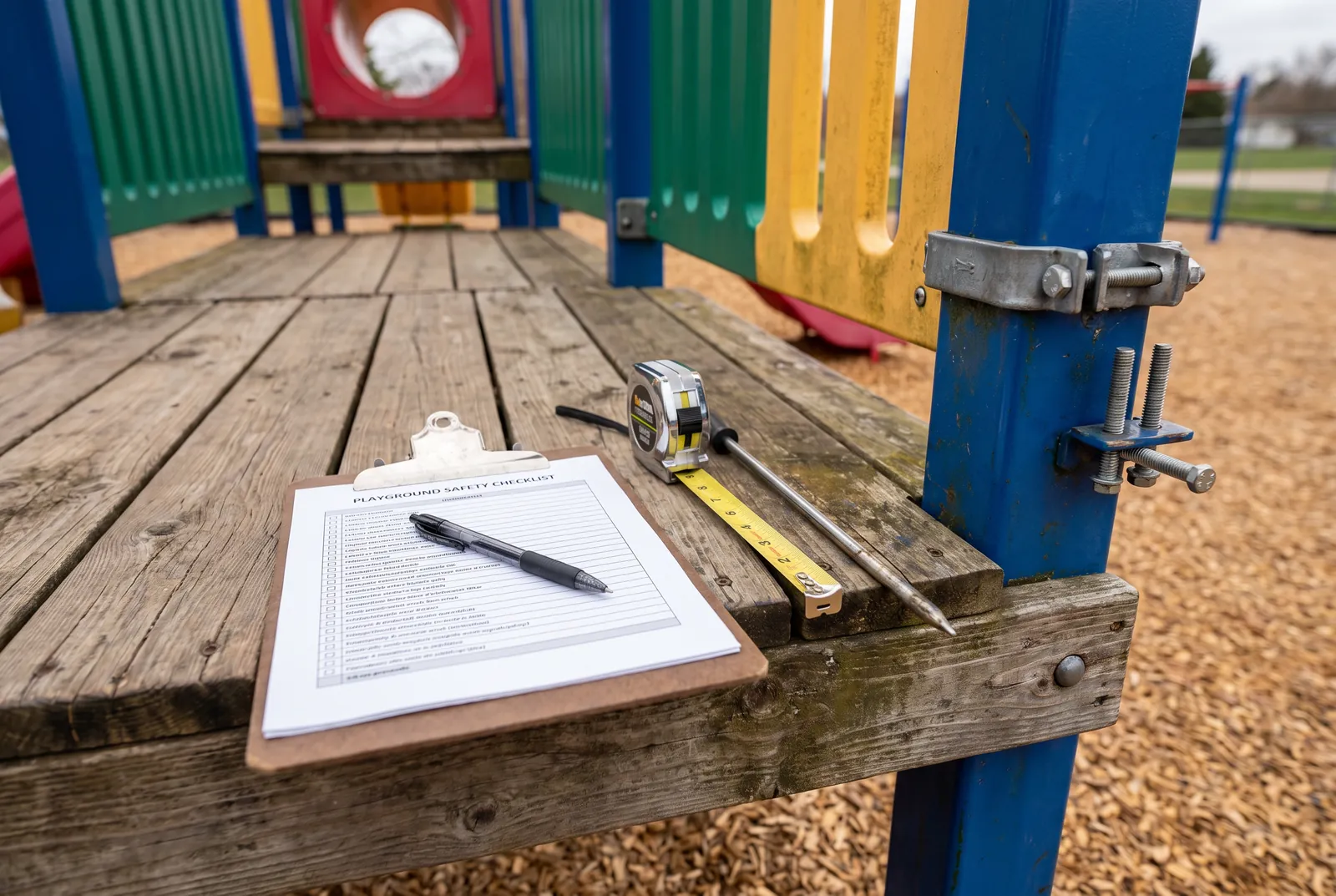
Who inspects your playground?
Johnathon Vaughn, one of our two co-owners. He’s spent more than 30 years in outdoor construction and holds the Certified Playground Safety Inspector credential, which comes through the National Recreation and Park Association’s National Playground Safety Institute and has to be renewed every three years.
That matters because the rules move. The CPSC’s Public Playground Safety Handbook and the ASTM standards behind it — F1487 for ages 2 to 12, F2373 for children under two — get revised, and an inspection is only as good as the edition the inspector learned.
The checklist
What we check, down to the last bolt and nut
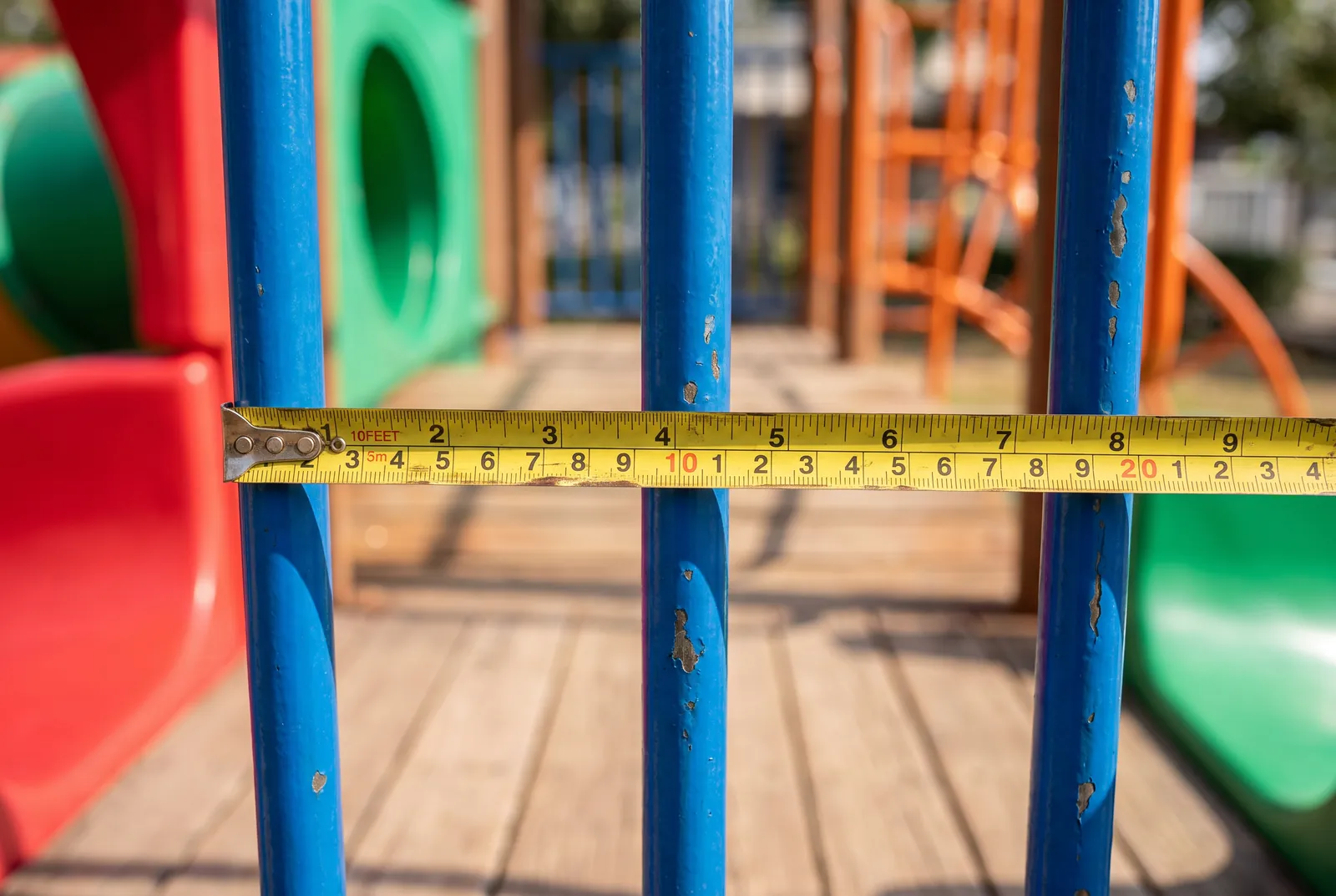
Every part of the playground gets looked at, measured where there’s something to measure, and written down.
Hardware
Loose, missing or worn bolts and clamps, open S-hooks, worn swing hangers and chains.
Structure
Rust, cracks, splinters, broken welds, worn decks and loose steps.
Entrapment
Openings between 3.5 and 9 inches that can trap a child’s head, and gaps that catch drawstrings.
Guardrails
Guardrails and barriers at the right heights — 20 and 30 inches for preschool platforms, 30 and 48 for school-age.
Use zones
A clear 6 feet around stationary equipment, and twice the pivot height in front of and behind swings.
Surfacing
Type, depth and condition — loose fill loses at least a quarter of its depth as it settles.
Accessibility
Accessible routes and surfaces under the 2010 ADA Standards and ASTM F1951.
Age areas
Toddler, preschool and school-age equipment kept in separate areas, the way the CPSC recommends.
The report
What happens when we find something?
It goes in the report. Every inspection ends with an extensive written report of the deficiencies we found and our recommendations for fixing each one, so you can decide what to handle now and what to put in next year’s budget. Some fixes take a wrench; others mean a replacement part or new surfacing.
Keep that report. The CPSC recommends keeping inspection and repair records for every public playground, and a board, an insurer or a parent may ask to see them.
Why it matters
A playground can pass the eye test and still be wrong
Plenty of commercial playgrounds in the Southeast were put in without following the safety recommendations of the National Playground Safety Institute. Nothing looks wrong from the parking lot — the problem is a use zone that overlaps a sidewalk, a guardrail a few inches short, or surfacing that’s settled well below the fill line.
An inspection finds those before a child does. Paired with our maintenance packages, it happens once a year without anyone having to remember to call.
Answers
Inspection and safety: what people ask
How often should playground equipment be inspected?
As often as its use and weather demand — that’s how the CPSC’s handbook puts it — so a busy public playground gets quick walk-throughs often and a thorough inspection on a set schedule. Our maintenance packages build in a full inspection once a year by a Certified Playground Safety Inspector.
How much does a playground inspection cost?
It depends on how many structures and play components there are and how far the site is from Milton, Tennessee, so we quote each inspection free. One structure with a row of swings is a short visit; a park with several play areas takes longer to measure, photograph and write up.
What does a playground safety inspection check?
Every part of the playground, down to the last bolt and nut: hardware and welds, rust and cracks, openings between 3.5 and 9 inches that can trap a child’s head, protrusions, guardrail heights, the use zones, and the depth and condition of the surfacing under each piece of equipment.
What is a Certified Playground Safety Inspector?
A CPSI is an inspector certified through the National Recreation and Park Association’s playground safety program, which covers the CPSC handbook and the ASTM playground standards; the certification has to be renewed every 3 years. Action Playgrounds co-owner Johnathon Vaughn holds it.
What do we get after the inspection?
A written report listing every deficiency found and what we recommend to fix it, so you can plan repairs, budget for parts and keep the report with your records. The CPSC recommends keeping inspection and repair records for every public playground — this is the first page of that file.
Can you inspect a playground another company installed?
Yes, whoever built it and whatever the brand. Many commercial installers don’t follow the safety recommendations of the National Playground Safety Institute, and a structure put in wrong can hurt someone years later — which is exactly what an independent inspection is for.