
Commercial playgrounds across TN · KY · AL · GA

(615) 995-1496

Surfacing & flooring

Playground surfacing and floor covering

Poured-in-place rubber, rubber mulch, engineered wood fiber, synthetic turf and indoor play flooring — each one matched to the fall height of the equipment above it and to how the play area gets used.

Action Playgrounds’ superhero mascot in his blue suit, gold gloves and boots, with the company logo on his chest, pushing a wheelbarrow of wood fiber
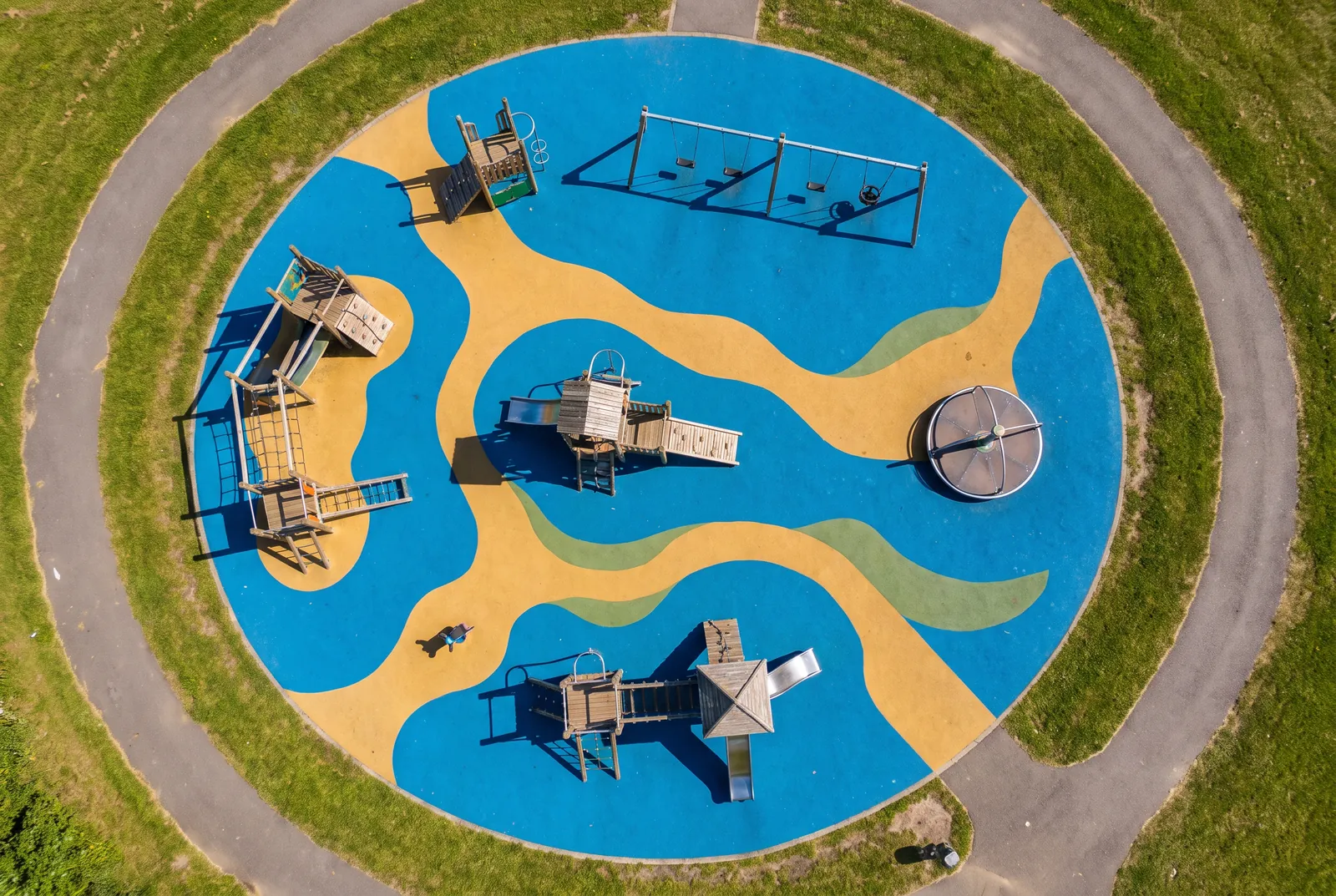
An aerial view of a playground surfaced in blue and gold poured rubber shapes around play structures, swings and a spinner

Start here

How thick does playground surfacing need to be?

As thick as your equipment’s fall height demands. Every surface under a playground is judged by how it handles a fall from the highest point a child can stand or climb, and ASTM F1292 is the test: a surface passes at a given height when the impact stays under 200 g-max and a Head Injury Criterion of 1,000.

That one number decides how thick the rubber has to be or how deep the loose fill must go, so it’s the first thing we work out. Asphalt, concrete, packed dirt and grass never pass — the CPSC’s handbook rules all of them out under equipment.

Your options

Seven ways to cover the ground

They differ in what they cost up front, what they need each year and whether a wheelchair can roll across them.

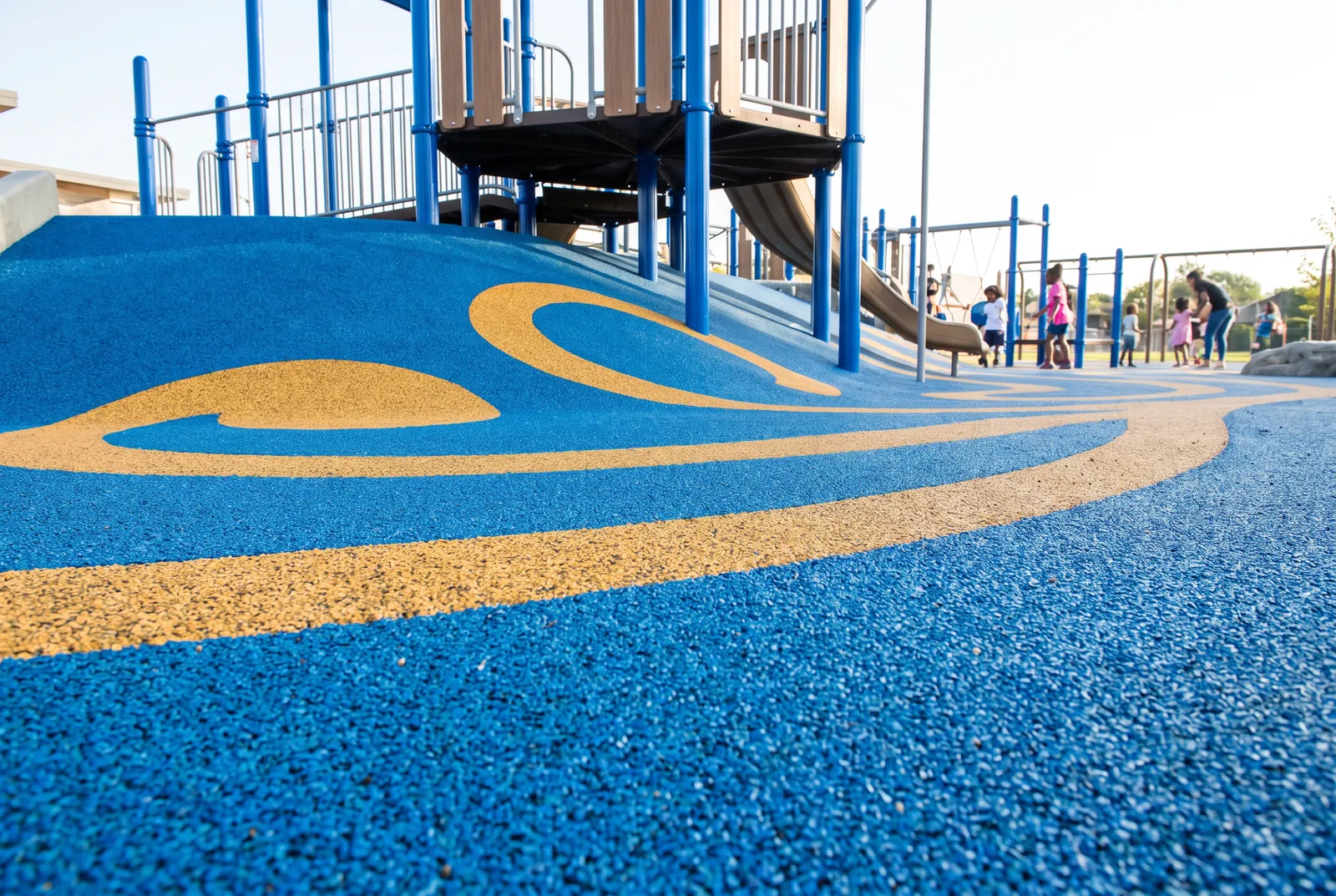
Close view of blue and gold poured-in-place rubber surfacing with its rubber granules visible

Poured-in-place rubber

Two layers poured on site: a cushion of recycled SBR rubber sized to the fall height, and a colored EPDM wear layer on top, bound with polyurethane. Seamless, accessible and able to take color and graphics. ASTM F2479 is the guide for specifying and installing it.
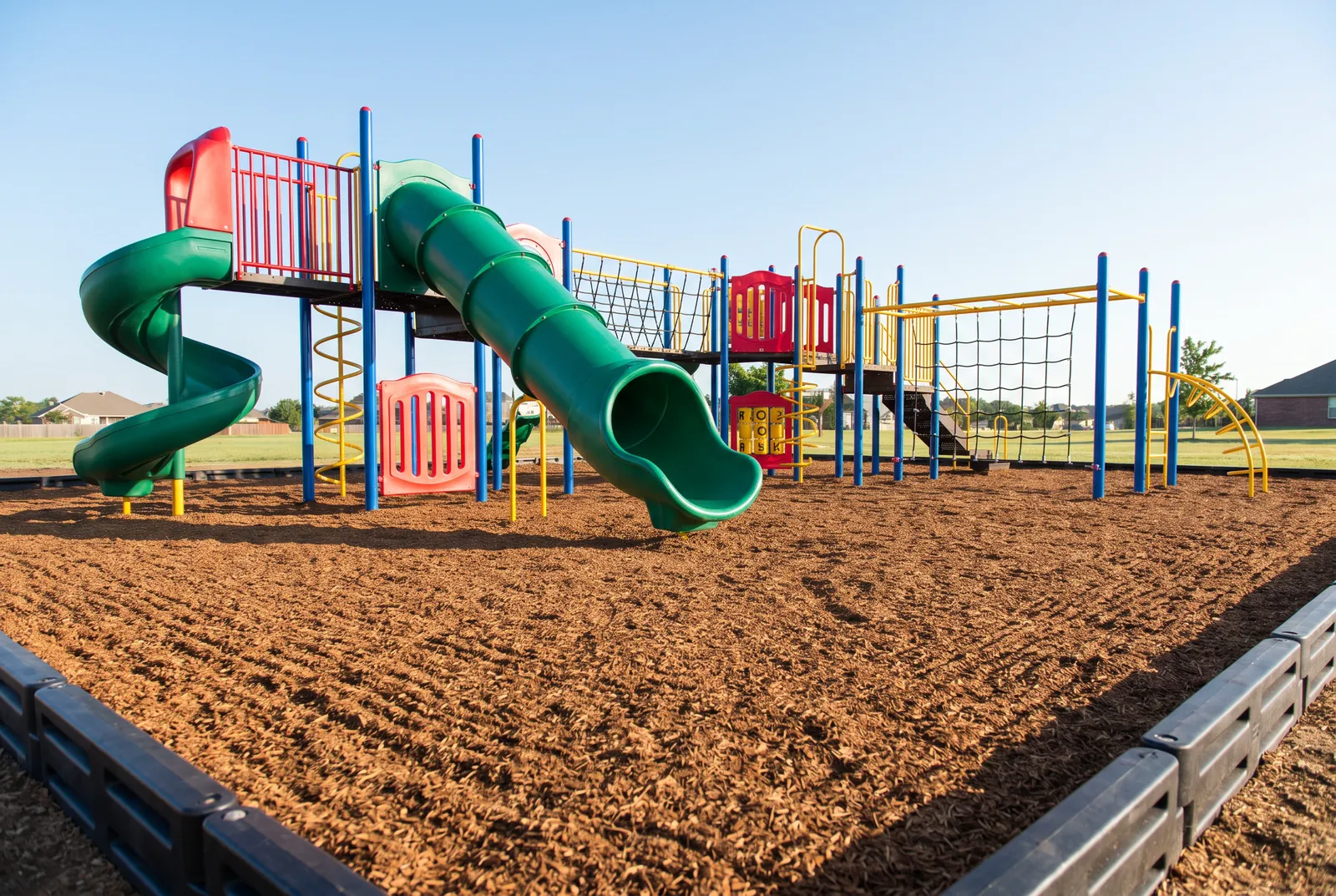
A thick, freshly raked bed of engineered wood fiber inside a black border under a colorful play structure with green tube and spiral slides

Engineered wood fiber

Wood fiber made to ASTM F2075, laid deep and compacted. Kept at depth and raked level, it can meet ASTM F1951 for wheelchair access. Plan on topping it up: a 12-inch fill settles to about 9 inches by itself.

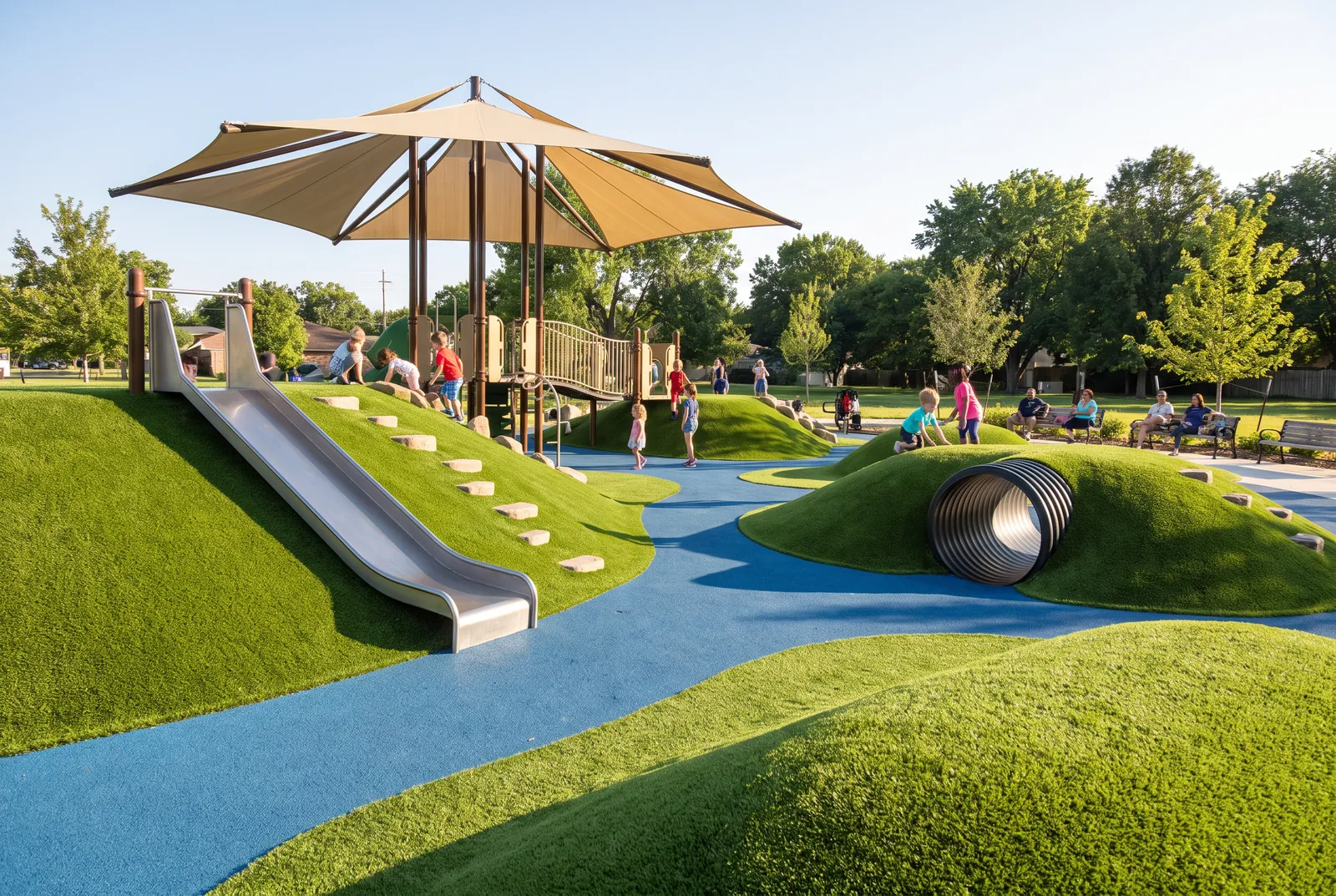
Green synthetic turf shaped into play mounds with a tunnel and an embankment slide, blue rubber paths and a shade sail

Synthetic turf

Turf laid over a shock pad sized to the fall height. Green all year, easy to shape into mounds and berms, and there’s no mulch to chase back under the swings.

Rubber tiles

Interlocking tiles whose thickness is rated to a fall height, laid on a prepared base. One damaged tile comes out and a new one goes in.

Bonded rubber mulch

Rubber nuggets mixed with a binder and troweled in place — the look of mulch, but it stays put under swings and at slide exits.

Loose rubber mulch

Shredded rubber poured to the depth its F1292 test calls for, made to ASTM F3012. Lower cost up front than poured rubber; it needs raking and topping up.

Indoor play flooring

Cushioned flooring and padding for soft play in malls and family centers, under equipment built to ASTM F1918.

Accessibility

Which surfaces work for wheelchairs?

The 2010 ADA Standards require the accessible routes in a play area to have surfaces that meet ASTM F1951, and inside the use zones those surfaces have to meet ASTM F1292 as well. Poured-in-place rubber, tiles and bonded rubber meet both once they’re in; loose fill only does while somebody keeps it compacted, level and at depth.

That’s the real trade-off between the options. The surface that costs less today often costs more in upkeep — and when it’s let go, the accessible route is the first thing to fail.

Resurfacing an old playground?

Resurfacing an existing playground, or adding a surface under equipment that never had the right one? Tell us the equipment’s tallest platform height and what’s on the ground now, and we’ll price the options that fit.

Answers

Surfacing and floor covering: what people ask

What is the safest playground surface?

The one tested for your equipment’s fall height and kept that way. Under ASTM F1292 a surface passes when a test fall stays under 200 g-max and a HIC of 1,000; poured rubber, rubber tiles, rubber mulch, wood fiber and turf over a pad can all get there.

How much does rubber playground surfacing cost?

Rubber surfacing is priced by the square foot, and thickness drives it — a taller structure’s fall height needs a thicker cushion layer. Poured-in-place usually costs more up front than loose rubber mulch, so we price the options side by side for your play area, free.

How long does poured-in-place rubber last?

It lasts longest when the top layer is protected. The colored EPDM wear layer takes the sun and the traffic, and the spots under swings and at slide exits wear first — patching those early, before the cushion layer shows through, puts off replacing the whole surface.

How much rubber mulch do I need for a playground?

Multiply the play area by the depth the mulch’s ASTM F1292 test calls for at your fall height. For example, at 6 inches deep a 30-by-40-foot area takes 600 cubic feet — about 22 cubic yards — and the depth is measured settled, so plan on topping it up.

Is rubber mulch safe for playgrounds?

Yes — shredded rubber is one of the loose-fill surfaces the CPSC’s handbook lists for use under playground equipment, and ASTM F3012 is its specification. Buy mulch tested to ASTM F1292 for your fall height, keep it at depth, and expect it to run hotter than wood fiber in July.

What should never go under playground equipment?

Asphalt, concrete, grass and packed dirt. The CPSC’s handbook calls hard surfaces unsuitable under and around equipment because none of them cushions a fall, and grass that looks soft wears down to bare, packed ground under swings and at slide exits.

Is engineered wood fiber ADA accessible?

It can be. Engineered wood fiber made to ASTM F2075 and installed and compacted properly can pass ASTM F1951, the accessibility test for playground surfaces — but only while it’s kept at depth and raked level, since loose fill settles by 25% or more and gets kicked out of the busiest spots.

Free quotes

Let’s get your playground going

Tell us about the site and who’ll play there. We’ll call you back to talk it through and set up a time to see it.

Call Get a Free Quote