
Maintenance & repair
Playground maintenance and repair
Routine checks, repairs and parts replacement for any brand of equipment, packaged with an annual inspection by a Certified Playground Safety Inspector — or a one-time restoration when a playground’s been let go.
The package
What does playground maintenance include?
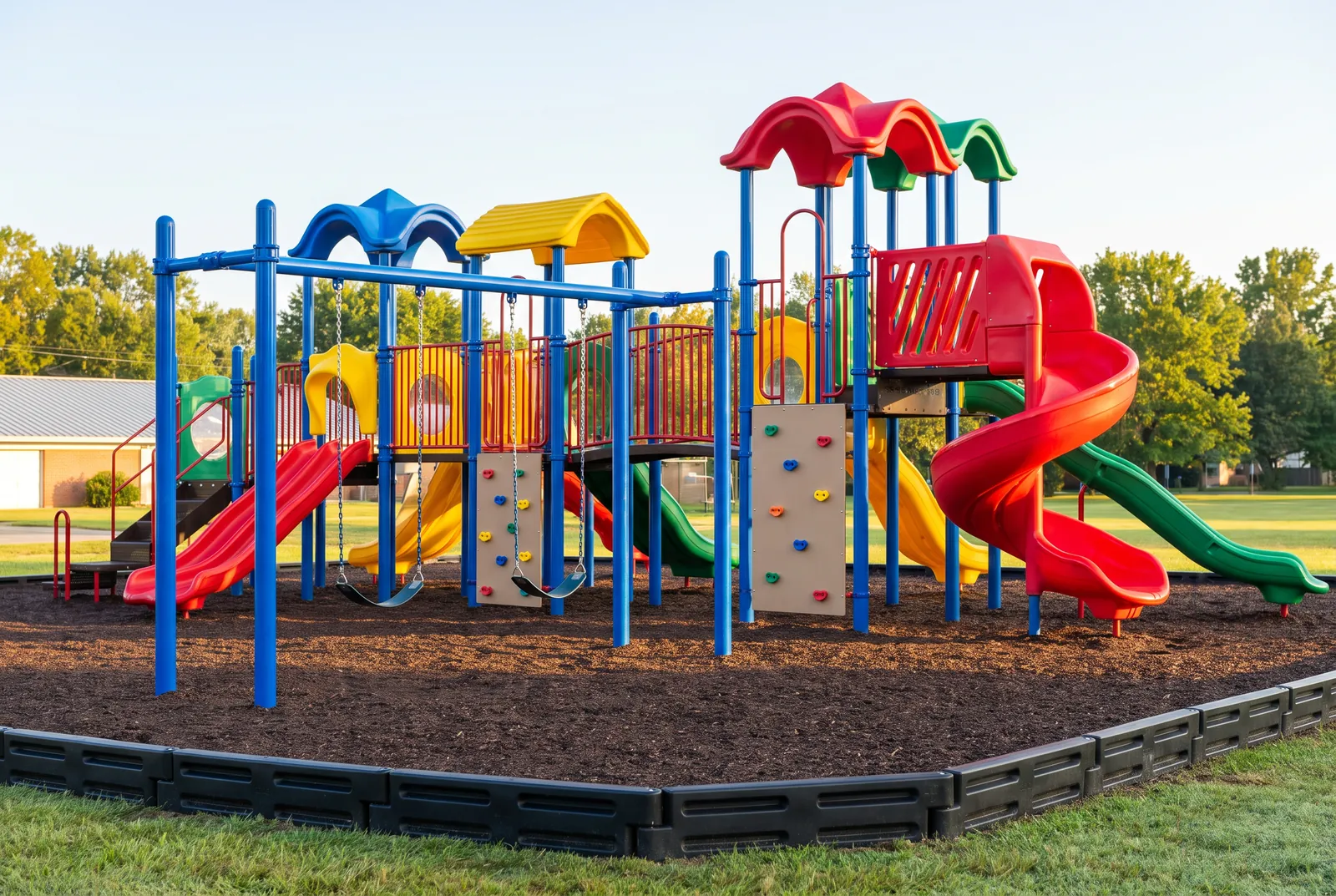
Our maintenance packages combine routine checks, repairs and parts replacement with an annual playground inspection. The checks catch what’s working loose, the repairs and new parts deal with it, and the inspection gives you a written record once a year of where the whole playground stands.
Parks, school playgrounds, church lots and HOA amenities all take a beating from weather and heavy use. Keeping up with it part by part is how a playground stays open instead of getting taped off.
Where the wear shows
What we look at on a maintenance visit
The CPSC’s handbook carries a routine inspection checklist for public playgrounds. These are the parts of a playground that wear fastest.
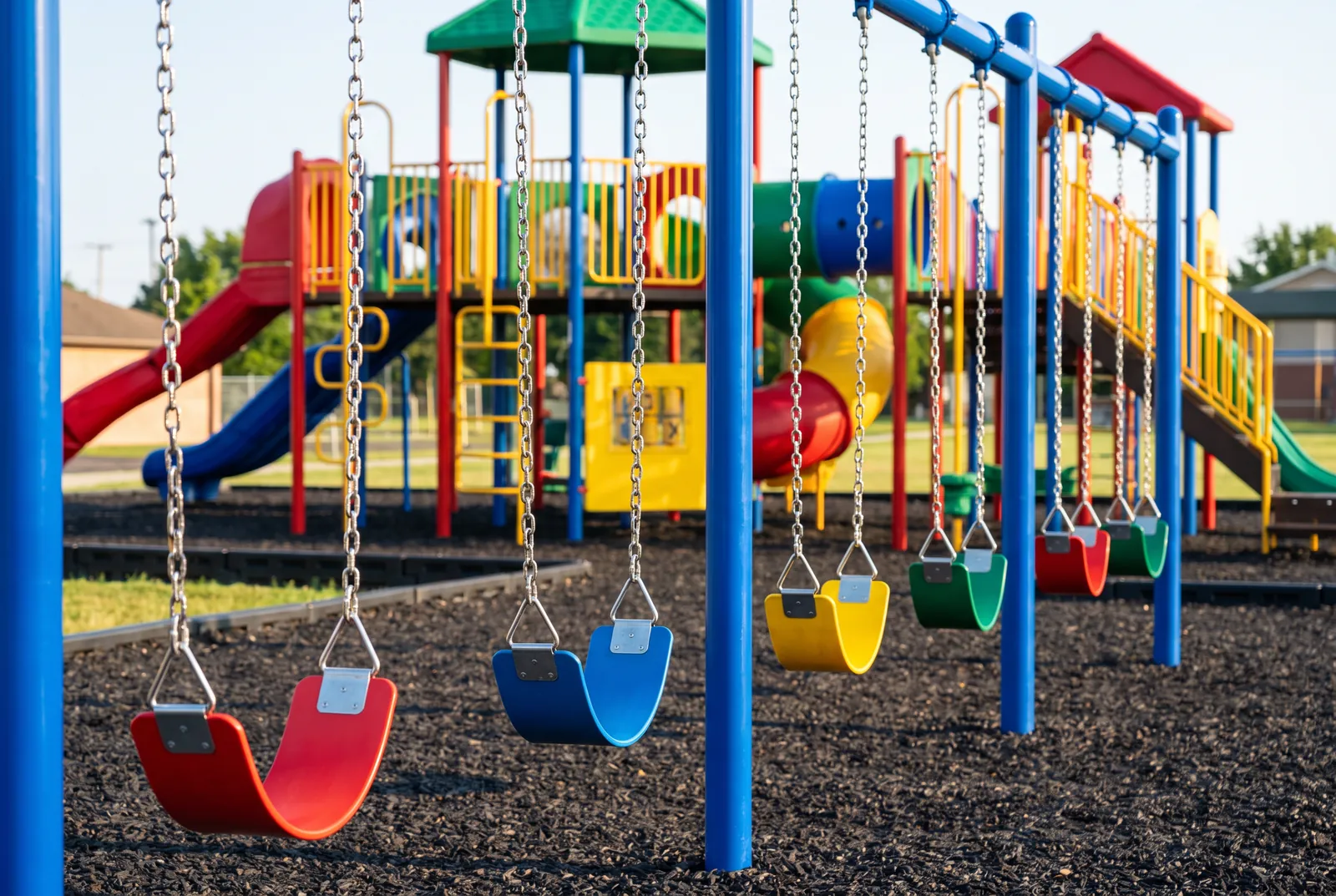
Swings
Hangers, chains, S-hooks and seats — the moving parts, and the first to go.
Hardware
Bolts and clamps that work loose, missing end caps and fasteners.
Loose fill
Wood fiber or rubber mulch kicked out from under swings and slide exits, back to the fill-level marks.
Plastics
Cracked panels, slides and steps that leave sharp edges.
Metal and wood
Rust, peeling coatings, splinters and soft spots.
Slides
Cracked beds, rough seams and the hollow worn into the surfacing at the exit.
Any brand
Equipment we didn’t install? Not a problem.
Repairs and replacement parts cover any brand of playground equipment, wherever it came from. Send the manufacturer and model — or a photo of the label on a post — with photos of what’s broken, and we’ll quote the parts and the labor.
If you’re not sure what needs doing, start with an inspection. The written report sorts the repairs into what should happen now and what can be planned, and it becomes the first page of the playground’s maintenance file.
Answers
Maintenance and repair: what people ask
How often should playground equipment be replaced?
Part by part, as things wear, rather than all at once. Swing seats, hangers, chains and plastic panels wear out long before the posts do, and an annual inspection tells you which parts are due each year — so replacement becomes a line in the budget instead of a surprise.
What does a playground maintenance package include?
Routine checks, repairs and parts replacement, combined with an annual playground inspection by a Certified Playground Safety Inspector. The checks catch what’s working loose; the repairs and parts deal with it; the inspection gives you a written record once a year of where the playground stands.
Do you repair equipment from other manufacturers?
Yes. Repairs and parts replacement cover any brand, wherever it was bought. Send us the structure’s manufacturer and model — or a photo of the label on a post — along with photos of what’s broken, and we’ll quote the parts and the labor.
What wears out first on a playground?
The moving parts and the ground under them. Swing hangers, S-hooks, chains and seats wear fastest, then the loose fill kicked out from under swings and slide exits. The CPSC’s handbook also flags hardware that works loose, open S-hooks and sharp edges on cracked plastic.
Do you do one-time repairs, or only maintenance contracts?
Both. You can book a single repair or a one-time restoration of a tired playground, or set up a maintenance package with an annual inspection built in. A good place to start is an inspection: its written report shows which repairs to do now and which to plan for.
How do I know when loose-fill surfacing needs topping up?
Mark the right level on the posts. The CPSC suggests fill-level markers on support posts so anyone can see when wood fiber or rubber mulch has dropped; a 12-inch fill settles to about 9 inches on its own, and the areas under swings and at slide exits lose it fastest.